
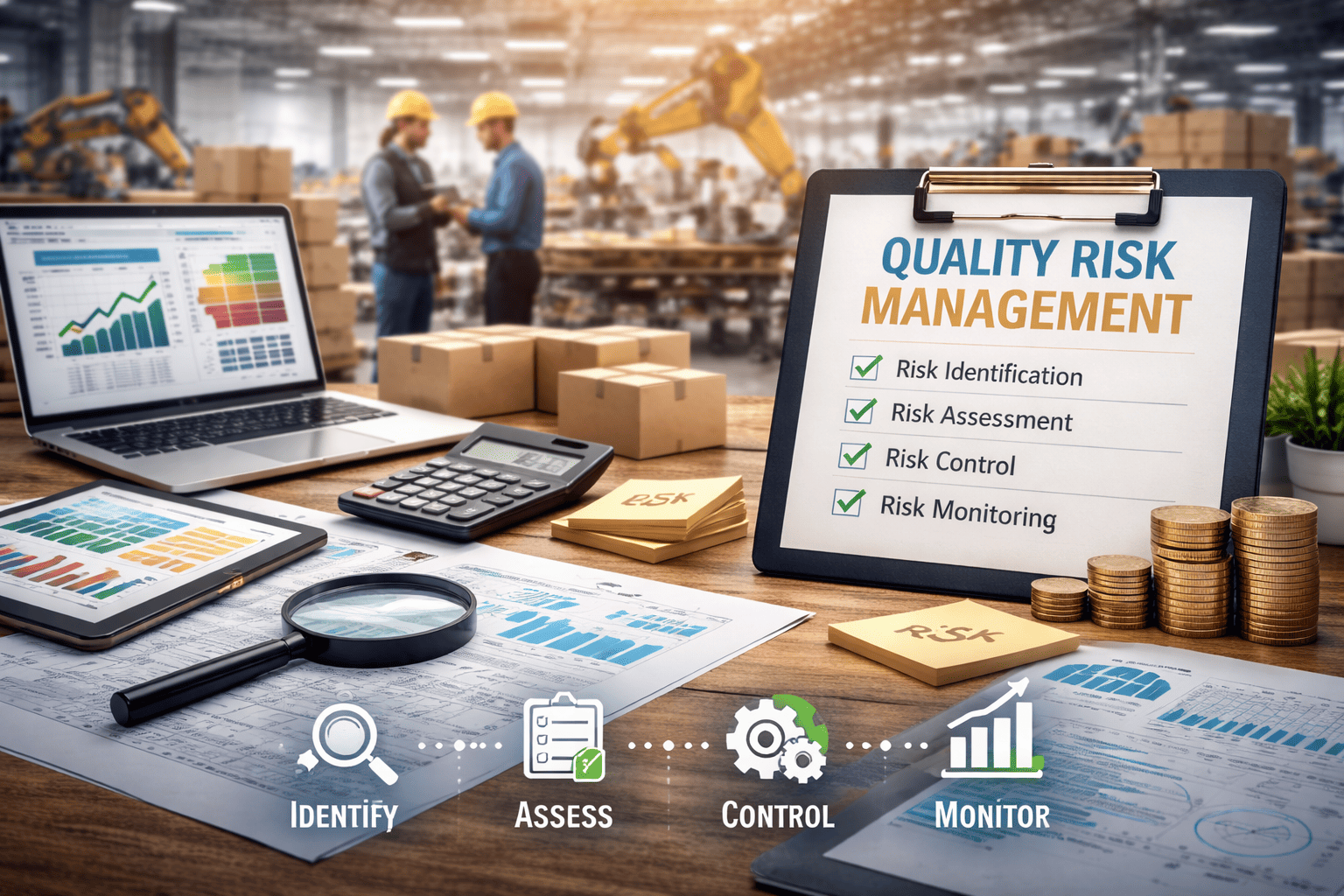
Quality Risk Management (QRM) is a structured and systematic approach used to identify, assess, control, and monitor risks that may impact product quality throughout the entire lifecycle from raw material sourcing to manufacturing, logistics, and final delivery.
In today’s highly globalized and complex supply chains, QRM has become an essential component of modern quality assurance systems. It enables organizations to move from a reactive mindset to a proactive and preventive strategy, ensuring that potential issues are addressed before they escalate into costly defects, delays, or compliance failures.
Core Principles of Quality Risk Management
Quality Risk Management is built on a clear and logical framework designed to support data-driven decision-making and continuous improvement. The process typically includes four key steps:
- Risk Identification:
This first step involves detecting all potential risks that could affect product quality. These risks may originate from suppliers, raw materials, production processes, equipment, or human factors. - Risk Assessment:
Once identified, risks are evaluated based on their likelihood of occurrence and potential impact. Tools such as risk matrices or Failure Mode and Effects Analysis (FMEA) are often used to prioritize critical risks. - Risk Control:
Organizations then implement preventive or corrective measures to reduce or eliminate risks. This may include improving supplier selection, adjusting production parameters, or strengthening inspection protocols. - Risk Monitoring and Review:
Risk management is an ongoing process. Continuous monitoring ensures that mitigation strategies remain effective and allows for adjustments as conditions evolve.
Why Quality Risk Management Matters
Implementing QRM offers significant advantages for businesses operating in manufacturing and international trade:
- Prevention of defects:
By addressing risks early, companies can avoid quality issues before they occur. - Improved compliance:
QRM supports adherence to international standards such as ISO 9001, GMP, and industry-specific regulations. - Cost reduction:
Preventing errors reduces the need for rework, recalls, or rejected shipments. - Enhanced supplier reliability:
Evaluating supplier risks helps ensure consistent product quality. - Better decision-making:
QRM provides a structured framework for prioritizing actions based on risk levels.
Applications Across the Supply Chain
Quality Risk Management is applied at every stage of the product lifecycle:
- Supplier Qualification:
Assessing risks related to supplier capabilities, certifications, and historical performance. - Production Processes:
Identifying potential deviations in manufacturing, machine calibration issues, or human errors. - Logistics and Transportation:
Evaluating risks such as damage, delays, or environmental exposure during shipping. - Quality Control Inspections:
Integrating QRM into inspection strategies, including pre-production, during production, and final inspections.
To strengthen your quality control processes and minimize risks at every stage, explore expert solutions available on Amazing Quality Control.
Modern Tools and Technologies
In 2025, digital transformation has significantly enhanced Quality Risk Management practices. Companies increasingly rely on:
- Artificial Intelligence (AI):
Predicts risk patterns using historical data and identifies potential issues before they occur. - Risk Management Software:
Centralizes data, automates risk scoring, and provides real-time monitoring dashboards. - ERP Systems:
Integrate quality, procurement, and logistics data for better visibility and coordination. - IoT and Smart Sensors:
Monitor environmental conditions, machine performance, and product integrity in real time.
These technologies enable organizations to transition toward a predictive and data-driven quality culture, improving both efficiency and reliability.
Common Challenges and Best Practices
Despite its benefits, implementing QRM can present challenges:
Common Challenges:
- Hidden or underestimated risks in complex supply chains
- Lack of standardized risk assessment methods
- Insufficient communication between departments
- Rapid regulatory changes affecting compliance
Best Practices:
- Define clear risk evaluation criteria
- Maintain detailed documentation and traceability
- Foster cross-functional collaboration
- Regularly update risk assessments
- Use digital tools for automation and forecasting
By following these best practices, organizations can ensure that QRM remains effective and aligned with business objectives.
FAQ – Quality Risk Management
What is Quality Risk Management?
It is a structured process used to identify, evaluate, and control risks that may impact product quality.
Why is QRM important?
It helps prevent defects, ensures compliance, and improves overall operational efficiency.
Where is QRM applied?
In manufacturing, pharmaceuticals, logistics, and any industry where quality is critical.
What are the main steps of QRM?
Risk identification, risk assessment, risk control, and risk monitoring.
Can QRM be automated?
Yes, with AI tools, ERP systems, and specialized risk management software.
Conclusion
Quality Risk Management is no longer just a compliance requirementit is a strategic tool for ensuring consistent quality and long-term business success. By proactively identifying and mitigating risks, companies can protect their operations, improve efficiency, and strengthen customer trust.
In an increasingly competitive and global market, integrating QRM into your quality assurance strategy allows you to stay ahead of potential issues and maintain high standards across your supply chain. To enhance your quality control processes and implement effective risk management strategies, discover tailored solutions on Amazing Quality Control.
