
In 2025, consumers, regulators, and investors demand increased transparency and accountability from companies.
Ethical sourcing, or ethical procurement, is defined as the process of identifying, evaluating, and selecting suppliers who adhere to strict standards regarding fair labor practices, positive social impact, and environmental sustainability.
For companies operating in the quality control sector, especially those importing from Asia, understanding and implementing ethical sourcing is crucial.
Fundamental Concepts and Principles of Ethical Sourcing
Ethical sourcing is based on a set of guiding principles aimed at ensuring that every step of the supply chain is conducted responsibly and respectfully.
At the heart of this approach lies Corporate Social Responsibility (CSR), a concept according to which companies must integrate social and environmental concerns
into their business activities and interactions with stakeholders.
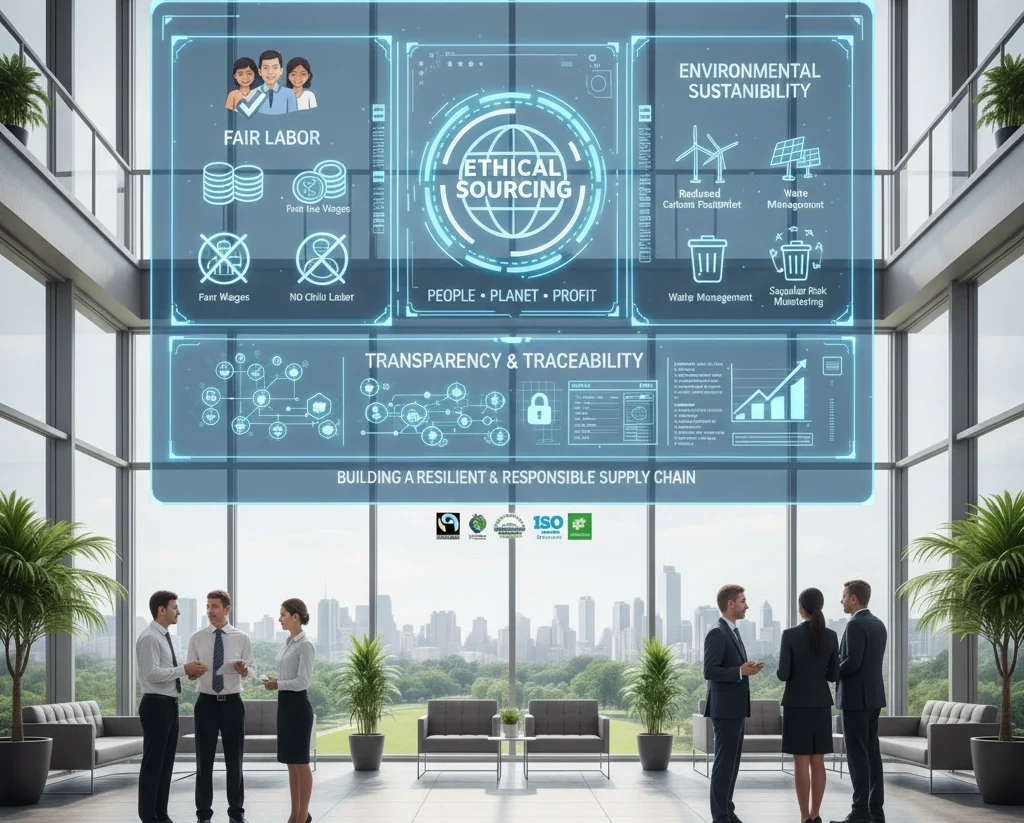
Ethical sourcing is a concrete manifestation of CSR, fitting within the vision of the “triple bottom line” (People, Planet, Profit), which evaluates a company’s performance not only on its financial results but also on its social and environmental impact.
- Fair working conditions: This encompasses respect for human rights, the absence of forced or child labor, fair wages, reasonable working hours, workplace safety and health, and freedom of association. For importers in Asia, this means increased due diligence to ensure that partner factories comply with these standards, often in collaboration with independent social auditors. To learn more about social audits, see our definition of Social Audit.
- Environmental sustainability: Suppliers must minimize their ecological footprint.
This includes the reduction of energy consumption, water waste, and greenhouse gas emissions, as well as responsible waste management and the use of sustainable or recycled materials. Environmental audits, life-cycle assessments, and ISO 14001 certification are often part of the verification process. - Transparency and traceability: Companies must know exactly where their products and raw materials come from, who produced them, and under what conditions.
Technologies such as blockchain, QR codes, and AI-based supplier databases now make it possible to ensure traceability throughout the entire production chain. - Business ethics: Ethical sourcing implies a zero-tolerance approach to corruption, discrimination,
or any unethical business behavior. This includes transparency in pricing, integrity in negotiations, and compliance with anti-bribery regulations such as the UK Bribery Act or the US Foreign Corrupt Practices Act.
How Ethical Sourcing Works in Practice
Implementing an ethical sourcing policy requires a structured, continuous process.
It usually begins with a Supplier Code of Conduct — a document that defines the company’s expectations regarding labor conditions, environmental impact, and ethical practices. Suppliers are required to acknowledge and adhere to this code before entering a long-term business relationship.
The next step is conducting supplier evaluations and audits. These assessments, often performed by independent third parties, verify compliance through factory visits,
worker interviews, document reviews, and environmental inspections. Non-compliance does not always lead to termination; many companies adopt a corrective action plan approach to help suppliers improve their practices progressively.
In addition, ongoing monitoring through digital dashboards or KPIs (Key Performance Indicators) allows procurement teams to track supplier performance over time.
Metrics such as on-time delivery, defect rate, workplace safety incidents, and employee turnover are analyzed alongside ethical indicators like gender equality or waste reduction.
Ethical Sourcing and Technology
With globalization and complex multi-tier supply chains, verifying ethical compliance across all levels can be challenging.
Technology now plays a crucial role in overcoming this barrier. Artificial intelligence (AI) and predictive analytics help identify potential risks in the supplier network — for example, unusual production volumes or inconsistent labor cost data that may indicate hidden subcontracting or poor labor conditions.
Blockchain-based systems record transactions securely, providing full traceability from raw material sourcing to final product delivery. This transparency helps prevent unethical practices such as illegal mining, deforestation, or unregulated subcontracting. Ethical sourcing platforms like Amfori BSCI,
Sedex, or EcoVadis offer shared frameworks and databases for evaluating and monitoring supplier compliance globally.
Benefits and Challenges of Ethical Sourcing
While ethical sourcing initially requires investment in audits, training, and technology, the long-term benefits are substantial.
Companies that adopt ethical procurement practices gain:
- Improved brand reputation and customer trust
- Reduced operational, legal, and reputational risks
- Enhanced supplier reliability and quality consistency
- Better employee retention and engagement
- Access to ESG-focused investors and new market opportunities
The main challenges include lack of transparency in multi-tier supply chains, inconsistent global regulations,
and cost pressures that can discourage smaller suppliers from adopting ethical practices.
Overcoming these obstacles requires collaboration, capacity building, and continuous improvement programs.
Frequently Asked Questions about Ethical Sourcing
1. What is the difference between ethical sourcing and sustainable sourcing?
Ethical sourcing focuses primarily on social and human aspects — fair labor, safety, and integrity — while sustainable sourcing emphasizes environmental protection and resource efficiency.
In practice, both concepts overlap and are often part of the same responsible procurement strategy.
2. Why is ethical sourcing important for importers in Asia?
Because many supply chains involve multiple subcontractors, importers must ensure that their Asian suppliers respect international labor and environmental standards.
Ethical sourcing prevents issues such as forced labor, unsafe working conditions, and non-compliance with global regulations.
3. How can companies verify ethical sourcing practices?
Through supplier audits, certifications (ISO 14001, SA8000, Fairtrade), third-party inspections, and continuous performance monitoring.
Technology such as AI and blockchain also enhances verification and traceability.
4. What are common ethical sourcing certifications?
Common certifications include Fairtrade, Rainforest Alliance, Amfori BSCI,
WRAP, SA8000, and ISO 14001. These frameworks verify social and environmental compliance across industries.
5. What are the main risks of ignoring ethical sourcing?
Ignoring ethical sourcing can lead to severe consequences: loss of consumer trust, legal penalties,
brand reputation damage, production disruptions, and exclusion from ESG-conscious markets.
6. Can small businesses implement ethical sourcing?
Absolutely. Small businesses can start by selecting verified suppliers, requesting ethical certifications,
or joining collaborative sourcing networks that share audit data and sustainability tools.
Conclusion
In summary, ethical sourcing is not just a compliance requirement — it is the foundation of responsible, transparent, and sustainable global trade.
Companies that integrate ethical procurement into their strategy gain long-term trust, operational stability, and a competitive edge in an increasingly regulated and conscious market.
