
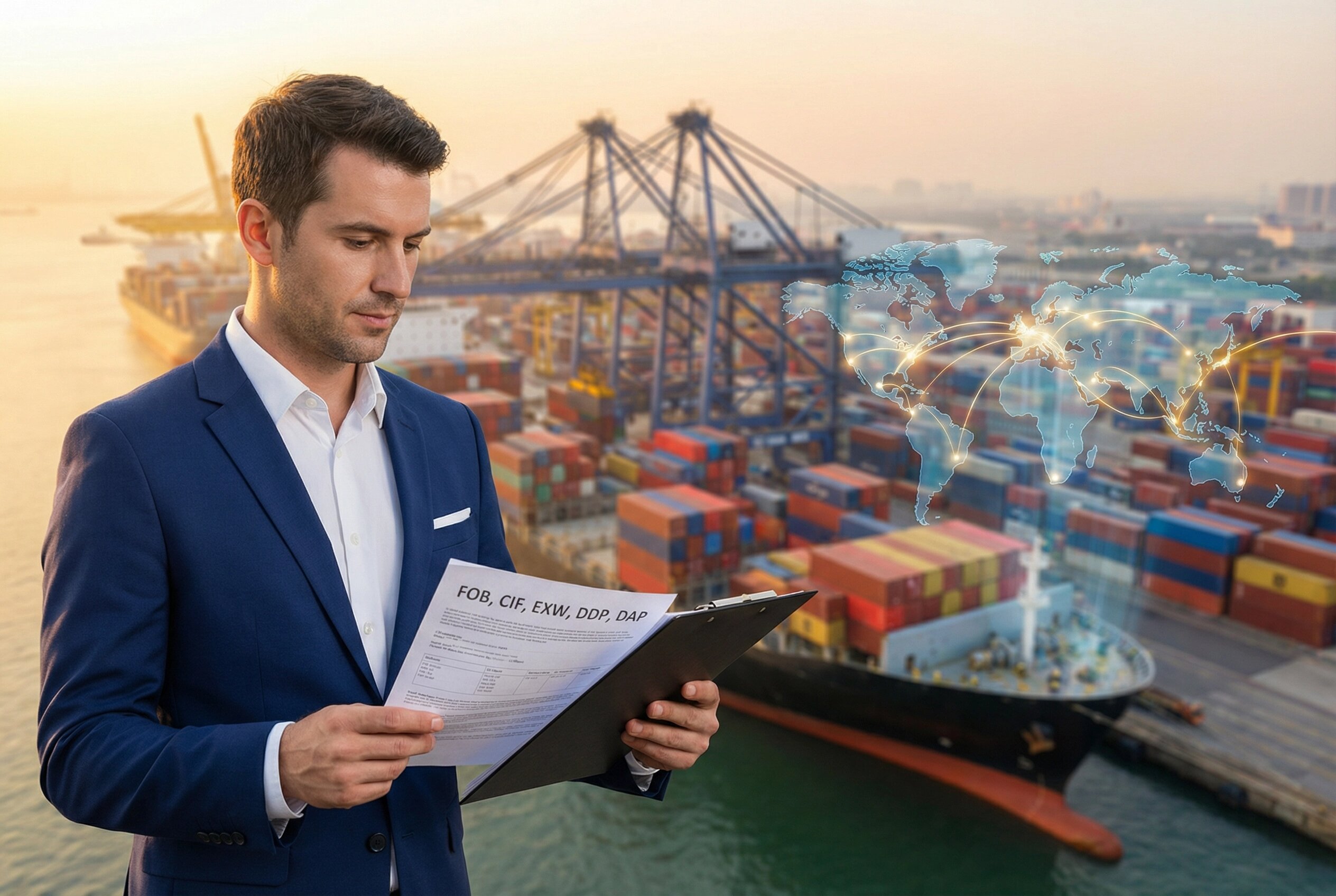
Incoterms, short for International Commercial Terms, are standardized trade rules developed by the International Chamber of Commerce (ICC). They define the responsibilities of buyers and sellers in international trade contracts. Incoterms clarify:
-
Who is responsible for transportation and insurance
-
Who handles customs clearance
-
The exact point at which the risk of loss or damage transfers from the seller to the buyer
Mastering Incoterms is essential for any company involved in import-export, particularly for importers sourcing from Asia. They help avoid costly misunderstandings, secure supply chains, and provide a common language recognized globally.
Historical Background and Key Principles
Introduced in 1936, Incoterms were designed to simplify international trade and reduce disputes. They are updated approximately every ten years to reflect evolving commercial practices. The latest version, Incoterms® 2020, includes 11 rules divided into two main categories:
-
Terms applicable to any mode of transport (7 rules)
-
Terms specific to maritime and inland waterway transport (4 rules)
Each Incoterm is represented by a three-letter acronym, which specifies the allocation of costs, responsibilities, and risks between buyer and seller.
Incoterms for Any Mode of Transport
-
EXW (Ex Works)
The seller makes the goods available at their premises. The buyer assumes nearly all costs and risks. EXW is often used when the buyer wants full control over logistics. -
FCA (Free Carrier)
The seller delivers the goods to the carrier specified by the buyer. Risk transfers at this point. FCA is flexible and widely used for cross-border shipments. -
CPT (Carriage Paid To)
The seller pays for transport to the agreed destination, but risk passes to the buyer when goods are handed over to the first carrier. -
CIP (Carriage and Insurance Paid To)
Similar to CPT, but the seller also arranges insurance for the transport. -
DAP (Delivered at Place)
The seller delivers goods to the named destination, ready for unloading. The seller bears all risks until that point. -
DPU (Delivered at Place Unloaded)
The seller delivers and unloads the goods at the destination. This is the only Incoterm where unloading is explicitly the seller’s responsibility. -
DDP (Delivered Duty Paid)
The seller bears all costs and risks, including import customs clearance, taxes, and duties. This Incoterm minimizes the buyer’s risk but requires the seller to manage local regulations effectively.
Incoterms for Maritime and Inland Waterway Transport
-
FAS (Free Alongside Ship)
The seller places goods alongside the vessel at the port of shipment. The buyer assumes risk from that point. -
FOB (Free On Board)
The seller loads goods onto the vessel. Risk and additional costs transfer to the buyer once goods are on board. -
CFR (Cost and Freight)
The seller pays transport to the destination port, but risk transfers to the buyer as soon as goods are on board. -
CIF (Cost, Insurance, and Freight)
Similar to CFR, but the seller also provides marine insurance to cover the risk during shipment.
Practical Importance of Incoterms
-
Clarity of Responsibilities: Clearly defines obligations for each party, reducing disputes.
-
Risk Management: Determines exactly when the risk passes, minimizing losses during transit.
-
Cost Planning: Helps calculate total landed cost and plan pricing strategies accurately.
-
Regulatory Compliance: Ensures adherence to customs and trade regulations.
-
Logistics Efficiency: Facilitates smooth coordination between suppliers, freight forwarders, and buyers.
For importers working with Asian suppliers, understanding Incoterms ensures that responsibilities for shipping, insurance, and customs are clearly defined, preventing costly surprises.
Common Scenarios and Examples
-
EXW: Buyer manages export documentation, shipping, and import clearance. Suitable for experienced importers.
-
FOB: Seller handles loading onto the ship; buyer handles main freight, insurance, and import duties.
-
CIF: Seller pays for shipping and insurance to the port of destination; buyer handles import and inland transport.
-
DDP: Seller manages everything, including customs and local taxes, delivering goods ready to unload at the buyer’s location.
Understanding these practical implications allows companies to choose the right Incoterm for their level of logistics expertise, risk tolerance, and cost management strategy.
FAQ on Incoterms
1. What does EXW mean and when should I use it?
EXW (Ex Works) places maximum responsibility on the buyer, who handles transport, insurance, and customs. Ideal for importers experienced in global logistics.
2. How is FOB different from CIF?
FOB: Buyer assumes risk after goods are loaded onto the vessel.
CIF: Seller arranges insurance during transit, protecting the buyer against maritime risks.
3. Why is DDP beneficial for the buyer?
The seller takes care of all transport, insurance, and customs, reducing the buyer’s responsibilities.
4. Are Incoterms legally binding?
While not laws, Incoterms are widely recognized in international contracts. Including them in a sales contract makes obligations and responsibilities legally clear.
5. Can Incoterms be combined with other trade agreements?
Yes, they can complement letters of credit, insurance policies, and service-level agreements to clarify responsibilities and risks.
6. How do I choose the right Incoterm?
It depends on the product type, transport method, logistics experience, and willingness to manage customs and risk.
7. Do Incoterms cover inland transport?
Some, like DAP or DDP, include delivery to a final destination, while others only cover port or carrier delivery. Knowing the exact coverage is critical for planning.
