
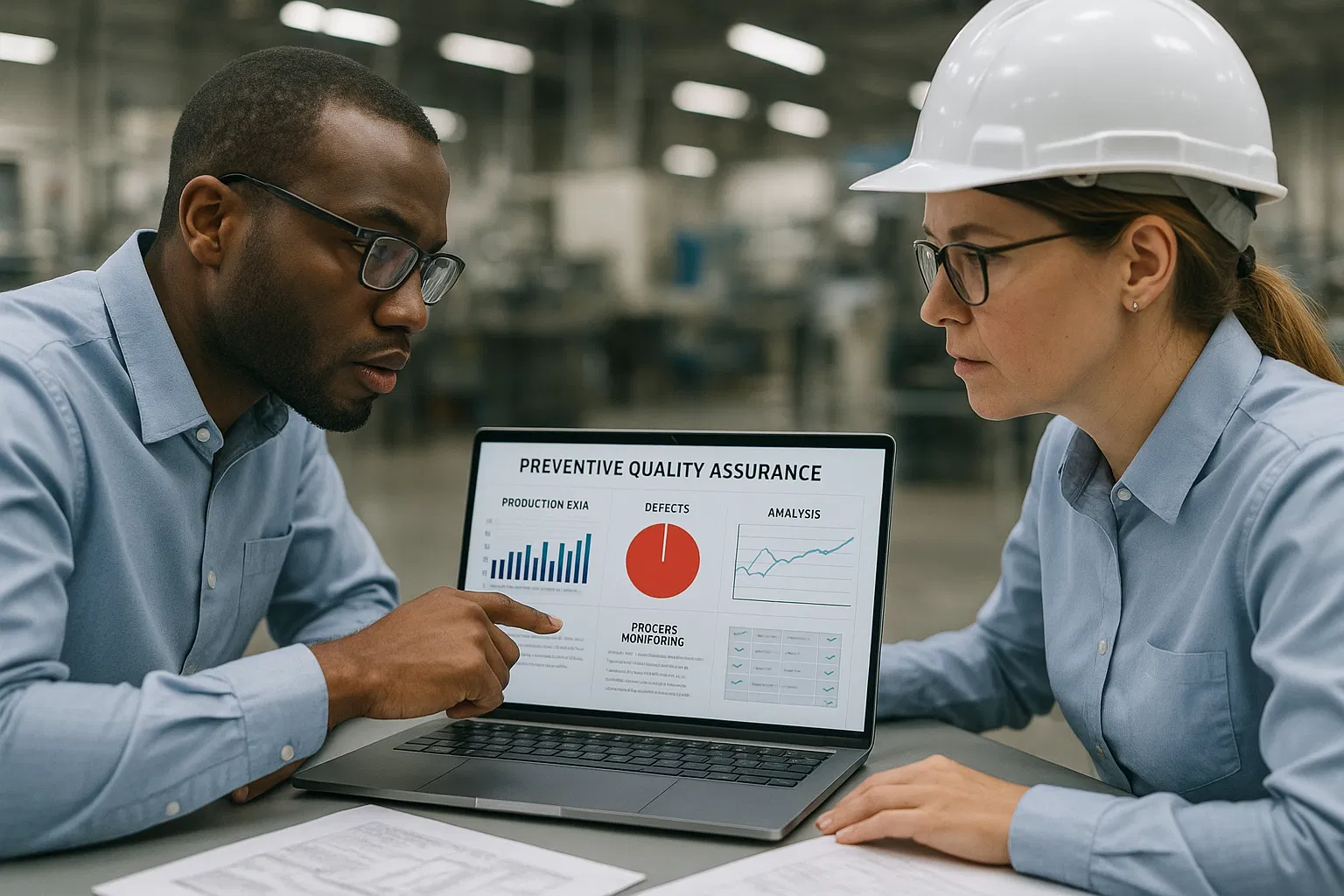
Preventive Quality Assurance is a proactive and strategic approach aimed at identifying, assessing, and eliminating potential causes of non-conformities and defects before they occur. For importers sourcing from Asia—where supply chains are complex and both cultural and logistical challenges abound—this approach is not just a competitive advantage but an operational necessity.
In 2025, as artificial intelligence (AI) becomes deeply integrated into production processes and global markets demand greater transparency and sustainability, Preventive Quality Assurance emerges as the cornerstone of successful manufacturing. It ensures that products comply with quality standards, customer requirements, and international regulations from the design stage to final delivery. By preventing errors early, businesses can significantly reduce production costs, avoid delays, and protect their brand reputation.
Ultimately, Preventive Quality Assurance safeguards investments, strengthens supplier relationships, and guarantees long-term customer satisfaction.
Fundamental Concepts and Principles of Preventive Quality Assurance
Preventive Quality Assurance is built on a set of foundational principles that distinguish it from traditional, reactive quality control systems. While quality control focuses on detecting defects after they appear, preventive assurance seeks to eliminate the root causes before they affect production.
-
Quality Planning:
This first pillar involves integrating quality requirements from the earliest stages of product design. It means defining clear product specifications, applicable standards (such as ISO 9001 or ISO 2859), and measurable acceptance criteria. Quality planning sets the framework for every subsequent process. -
Risk Analysis:
Through tools like FMEA (Failure Modes and Effects Analysis), companies anticipate potential problems within the manufacturing process. This risk-based approach enables prioritization—addressing high-impact risks first—and implementation of corrective and preventive actions (CAPA) before production even starts. -
Process Control:
Documenting, standardizing, and continuously monitoring each production stage ensures consistency and compliance. Statistical tools such as SPC (Statistical Process Control) help track deviations in real time and maintain process stability. -
Training and Competency Development:
Human error remains a major source of quality issues. Continuous training ensures that all operators understand not only how to perform their tasks, but why each step matters for overall product quality. -
Continuous Improvement:
Preventive Quality Assurance is not static—it evolves through feedback loops and performance monitoring. Data collected from production, inspections, and customer feedback is analyzed to refine systems and processes continually.
When rigorously applied, these principles create an environment where quality is embedded into every process, not merely inspected at the end of the line.
Benefits of Implementing Preventive Quality Assurance
Companies that invest in Preventive Quality Assurance enjoy tangible and long-term advantages across multiple dimensions:
-
Cost Reduction: Preventing defects early minimizes waste, rework, and product recalls—reducing overall production and warranty costs.
-
Operational Efficiency: Streamlined processes and clear communication reduce downtime, bottlenecks, and misunderstandings between suppliers and importers.
-
Customer Satisfaction: Consistent, defect-free products enhance brand trust and customer loyalty.
-
Regulatory Compliance: Meeting international quality and safety standards (such as ISO, CE, or FDA) becomes easier when risks are proactively managed.
-
Sustainable Growth: By preventing issues rather than reacting to them, companies can allocate resources strategically and focus on innovation rather than crisis management.
In global sourcing environments, particularly in Asia, this preventive approach enhances supplier collaboration and mitigates the risks associated with distance, time zones, and differing quality expectations.
Tools and Techniques Used in Preventive Quality Assurance
A variety of specialized tools support the implementation of Preventive Quality Assurance:
-
FMEA (Failure Modes and Effects Analysis): Identifies potential failure points and evaluates their consequences before they disrupt production.
-
APQP (Advanced Product Quality Planning): A structured method to ensure that all customer and regulatory requirements are addressed during product development.
-
SPC (Statistical Process Control): Monitors production data to detect anomalies early.
-
Supplier Audits: Evaluate suppliers’ processes, documentation, and compliance to maintain consistent quality levels.
-
CAPA (Corrective and Preventive Actions): Formal systems that define how to handle non-conformities and prevent their recurrence.
These tools complement each other and form the backbone of a preventive quality management system that is both data-driven and process-oriented.
The Role of Technology and AI in Preventive Quality Assurance
Digital transformation is revolutionizing Preventive Quality Assurance. AI, machine learning, and IoT technologies are reshaping how companies collect, interpret, and act upon quality data.
-
AI-based analytics can detect subtle patterns and predict potential failures with remarkable accuracy.
-
IoT sensors provide real-time visibility into production parameters such as temperature, pressure, and speed, enabling immediate corrective actions.
-
Cloud-based quality management systems (QMS) centralize documentation, training, and supplier performance tracking.
-
Computer vision enhances inspection accuracy by identifying microscopic defects invisible to the human eye.
This technological integration transforms preventive quality from a manual process into an intelligent, automated ecosystem that drives continuous improvement and traceability across the global supply chain.
Challenges and Best Practices
While the benefits of Preventive Quality Assurance are significant, successful implementation requires discipline, collaboration, and long-term commitment. Common challenges include:
-
Lack of standardized procedures across multiple suppliers.
-
Limited training or awareness about quality prevention.
-
Resistance to change from traditional inspection-based approaches.
-
Insufficient use of digital tools for data tracking and reporting.
To overcome these barriers, businesses should:
-
Develop a clear and unified quality policy across all suppliers.
-
Invest in ongoing training and supplier development programs.
-
Use digital tools to centralize and monitor quality data.
-
Encourage cross-functional collaboration between quality, production, and logistics teams.
-
Adopt international quality standards to maintain consistency and credibility.
FAQ on Preventive Quality Assurance
1. What is the main difference between Preventive Quality Assurance and Quality Control?
Quality Control is reactive—it detects defects after they appear. Preventive Quality Assurance is proactive—it prevents defects from happening in the first place.
2. Why is Preventive Quality Assurance important for importers?
It minimizes costly errors, improves supplier reliability, and ensures compliance with international standards—critical factors when sourcing from complex markets like Asia.
3. What tools are most commonly used in Preventive Quality Assurance?
FMEA, APQP, SPC, CAPA systems, and supplier audits are among the most effective tools.
4. How does AI improve Preventive Quality Assurance?
AI enhances risk prediction, automates inspections, and provides real-time insights that allow companies to make data-driven decisions before issues escalate.
5. What industries benefit most from Preventive Quality Assurance?
Manufacturing, automotive, electronics, textiles, and consumer goods—essentially any industry that relies on large-scale production and global supply chains.
Conclusion
In a globalized production landscape, Preventive Quality Assurance is not just a quality strategy—it’s a business imperative. By embedding prevention into every phase of product development and leveraging digital technologies, companies can build resilient supply chains, reduce risks, and deliver consistent quality at scale. It is the foundation upon which sustainable, efficient, and customer-centric manufacturing is built.
